Blog
Hidden Milan — The Celtic Soul of the City and Its Sacred History


Table of Contents
Most visitors to Milan come for the fashion, the Duomo, the Last Supper. A smaller number arrive knowing that something older runs beneath the city’s surface — older than the cathedral, older than the Roman forum, older than almost anything that appears in the standard guidebooks. A Celtic sacred city, founded on land already considered holy. A Goddess whose name was given to the waters of a river that still flows, invisible, beneath the streets. A spiritual history stretching back more than two thousand years, hidden in plain sight beneath one of Europe’s most famous metropolises.
Milan is one of the most unexpectedly sacred cities in the Western world — and almost nobody knows it. This hidden Milan tour takes you beneath the surface, guided by a Priestess of Avalon with a PhD in Old Norse and years of research into the pre-Christian sacred traditions of Northern Europe.
Milan Before Milan — The Celtic City of Medhelan
The city now known as Milan was founded by the Insubres, a Celtic tribe who settled the Po Valley around the sixth century BCE. They called their settlement Medhelan— a name whose etymology has fascinated linguists and historians for generations. The most widely accepted interpretation reads it as “the place in the middle of the plain”: medio, middle, and lanum, a word related to the Celtic concept of a sacred, flat, open space — a sanctuary at the centre of the world.
Medhelan was not merely a political and commercial centre. Celtic urban foundations were almost always simultaneously sacred — places where the boundary between the human and the divine was considered particularly permeable. The choice of location was deliberate, informed by an understanding of the landscape as living and ensouled, governed by forces that could be honoured, propitiated, and worked with.
The Insubres brought with them a rich pantheon of Celtic deities — among them a Goddess whose presence would remain embedded in the geography of the city long after the Celts themselves had been absorbed into the Roman world.
Goddess Belisama — The Radiant One
Belisama is one of the lesser-known figures of the Celtic divine feminine — lesser-known in the popular imagination, though well-documented in the epigraphic record. Her name derives from the Proto-Celtic belo-sama, meaning “the most radiant” or “the brightest one” — a solar epithet aligning her with light, fire, the sacred forge, and the living waters.
This radiant connection is further immortalized in the writings of the Roman historian Livy. He recounts how the Celtic prince Belloveso was guided by a divine sign — a legendary omen found beneath a hawthorn tree, a plant sacred to Belisama — to found the city at a specific, hallowed site. This ancient encounter gave Milan its first name and established a spiritual blueprint that still exists beneath the modern streets. While the symbols of this foundation remain hidden in plain sight, they are easily missed by the casual observer. Our tour uncovers these esoteric markers, connecting the dots of Milan’s hidden Celtic soul.
In the broader context of Celtic goddess traditions, Belisama shares qualities with Brigid — the Goddess of flame, of healing waters, of creative and crafting power. She is a Goddess of thresholds: between fire and water, between the sacred and the everyday, between the radiant surface of things and the deep current running beneath.
Walking through certain parts of Milan — particularly in the areas of the ancient Roman forum, and along the routes of the vanished Celtic settlement — it is possible to feel the residue of this older sacred geography. The city has built itself over its own past many times. The past is still there, for those who know how to look.
The Roman Layer — Minerva and the Sacred Feminine in Roman Milan
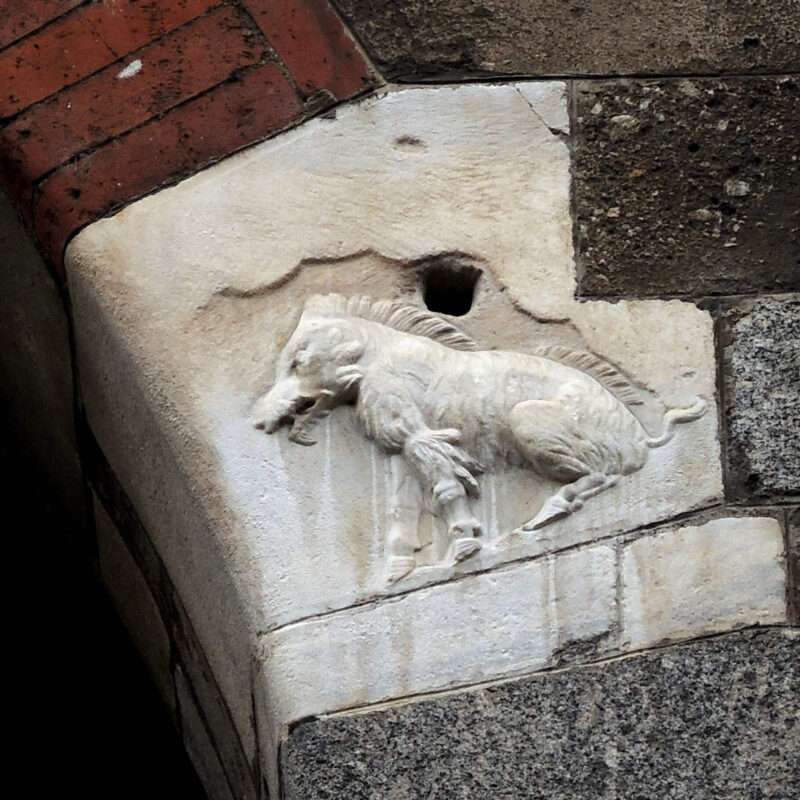
When Rome absorbed Medhelan in 222 BCE, turning its name into Mediolanum, the city’s sacred character did not disappear. It transformed. The Romans were, in general, pragmatic about indigenous religious traditions — identifying local deities with their own divine figures through a process known as interpretatio romana, and continuing to honour them under new names.
Belisama, with her qualities of radiance, craftsmanship, wisdom, and healing waters, was readily identified with Minerva — the Roman Goddess of wisdom, arts, and strategic intelligence. Dedications to Minerva from the Roman period have been found in the Milan area, and the Goddess’s presence in the city’s sacred topography is well-attested in the archaeological record.
Minerva herself carried a long history reaching back into Etruscan and older strata of Mediterranean goddess veneration. Her association with Milan during the Roman period adds another layer to a sacred feminine presence in this city that reaches, with remarkable continuity, across more than twenty-five centuries.
Cities with strong sacred feminine foundations tend to preserve them — in the landscape, in the names of streets and rivers, in churches built on the sites of older sanctuaries, in local traditions that survive long after the explicit religious frameworks have changed. Milan is a compelling example.
Hidden in Plain Sight — Sacred Sites of Milan Today
For those willing to look, Milan’s sacred history is not buried beyond reach. It is hidden in plain sight — in the layers of the city’s archaeology, in certain street names and neighbourhood boundaries, in churches built over earlier sacred sites, in the course of underground rivers that once ran openly through a Celtic sacred landscape.
The area around the ancient Roman forum — now broadly corresponding to the Piazza dei Mercanti and its surroundings in the historic centre — preserves something of the original sacred geography of Mediolanum.
Moving through Milan with this history alive in awareness transforms the experience of the city entirely. What appears to be a modern European metropolis reveals itself as something far older and mysterious: a sacred centre, founded on a Goddess-hallowed plain, carrying the traces of more than two millennia of spiritual history in its very bones.
The Private Hidden Milan Tour — What to Expect
The Milan International Goddess Temple offers private hidden Milan tours designed to bring this history alive — not as an academic exercise, but as a genuine experiential encounter with the city’s spiritual past and living sacred geography.
Led by a Priestess of Avalon with a PhD in Old Norse and years of research into the pre-Christian sacred traditions of Northern Europe, the tour moves through Milan’s key sacred sites with historical depth, mythological context, and the kind of embodied attention that transforms a walk through the city into something closer to a pilgrimage.
Tours are available as standalone esoteric Milan walking experiences or combined with other offerings — a guided meditation at a sacred site, an oracle reading session, a dedicated lunch in one of Milan’s most ancient neighbourhoods. Each tour is designed bespoke, tailored to the interests and intentions of the person or group attending. Private spiritual tours can be arranged for solo travellers, couples, and small groups of up to six people.
Who Is The Hidden Milan Tour For?
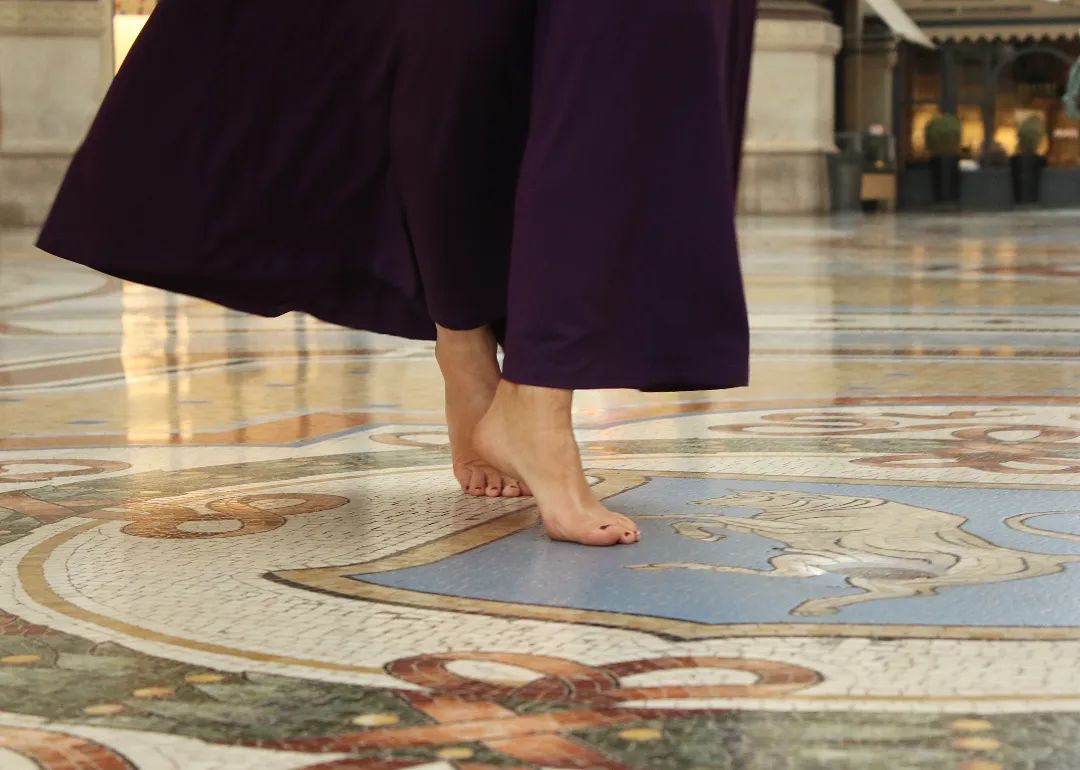
The hidden Milan tour is designed for a specific kind of visitor: curious, culturally literate, with an interest in history, mythology, or spirituality that goes beyond the surface. Solo travellers and couples seeking an experience of Milan that no standard guidebook offers. Expats living in the city who sense something deeper here and want to find it. Small groups — friends, colleagues, retreat participants — looking for a shared experience of genuine originality and depth.
The tour is conducted in English or in Italian. Groups with specific research, journalistic, or documentary interests are also welcome — contact the Temple directly to discuss tailored arrangements.
Frequently Asked Questions:
I am not particularly spiritual. Is this tour still for me?
Yes. The tour works equally well as a deep historical and archaeological experience — the Celtic and Roman layers of Milan are genuinely extraordinary regardless of any spiritual framework. You do not need to be a practitioner or a believer to find this tour worthwhile. Intellectual curiosity is enough.
What makes this different from a standard city tour?
The depth of the historical research behind it, and the quality of presence brought to each site. This is not a scripted walk between landmarks. It is a guided encounter with a city most visitors never see — led by someone with academic formation in pre-Christian northern European traditions who has spent years in relationship with this specific sacred geography.
Is this worth doing if I have already visited Milan before?
Almost certainly. The sacred and Celtic layer of Milan is almost entirely absent from standard tourism. People who have visited Milan many times consistently find this tour reveals a city they did not know existed.
Can I book this as part of a wider Italian trip?
Yes, and I would encourage it. Milan is an ideal starting point for a trip through northern Italy — the Lakes, Piedmont, the Po Valley — and the sacred history of Medhelan gives the entire journey a deeper layer of meaning. Get in touch to discuss how to build the experience around your itinerary.
See you at the Temple,
Anna
Priestess of the Goddess and of Avalon
I am a Priestess of the Goddess and of Avalon, and the Founder of the Milan International Goddess Temple. I trained at the Glastonbury Goddess Temple in the United Kingdom, where I serve as a celebrant Priestess and Melissa of the Temple. I hold a PhD in Old Norse, and the research I have carried through years of academic study in pre-Christian Northern European traditions informs everything I bring to the sacred history of Milan. My private sacred tours and spiritual experiences are available in person in Milan and, for some offerings, online.
Available for academic consultancy, media interviews, and documentary collaborations on ancient European sacred history, Goddess spirituality, and the spiritual heritage of Milan and Glastonbury Avalon — contact Anna.

