Blog
Goddess Spirituality — A Living Tradition for Our Times

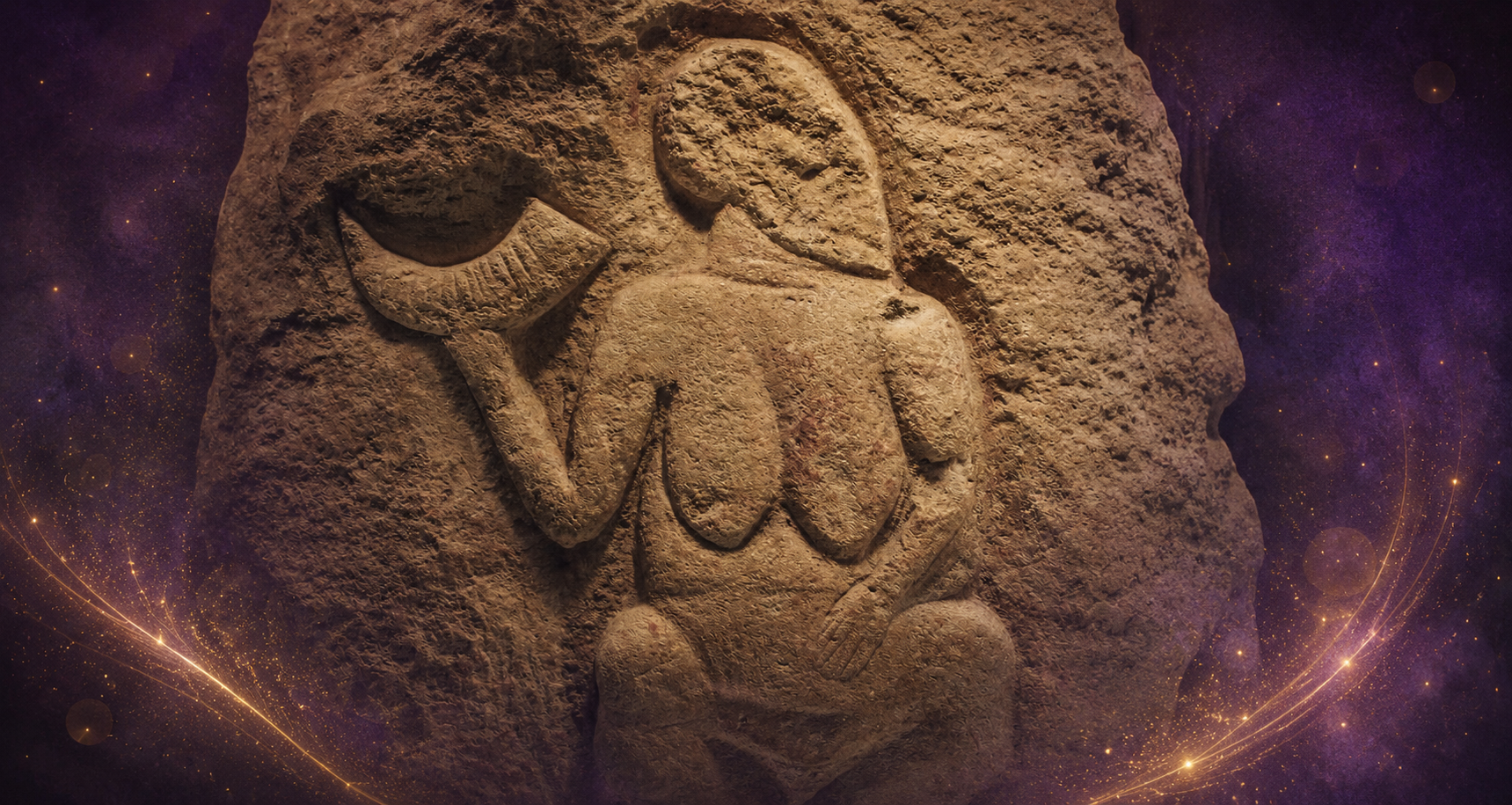
Table of Contents
There is a moment, for many people, when something shifts. A book found by accident, a ceremony attended on a friend’s invitation, a dream that refuses to be forgotten. A sudden, quiet recognition that the spiritual path they have been walking does not quite hold everything they are looking for — that something older, deeper, and more rooted is calling from somewhere underneath.
For a growing number of people across the world, Goddess spirituality is what answers that call.
This is an introduction to Goddess spirituality as a living tradition — what it is, where it comes from, how it is practiced, and why it continues to hold such profound relevance in contemporary life. Written from the inside, by a Priestess of Avalon who has lived and worked within this tradition for years.
What Is Goddess Spirituality?
Goddess spirituality is a broad and diverse field of spiritual practice centred on the recognition that the divine has a feminine face — and that this face has been largely, though never entirely, erased from the mainstream spiritual traditions of the Western world.
At its heart, Goddess spirituality affirms the sacred nature of the Earth, of the body, of the cycles of nature, and of life itself in all its forms. The Goddess — understood not as a distant, transcendent deity but as an immanent presence woven through the living world — is the central figure of devotion and encounter. She is present in the turning of the seasons, in the phases of the Moon, in the waters, in the land, and in the depths of the human psyche.
Goddess spirituality draws on a wide range of cultural and historical sources: the pre-Christian traditions of Europe, the ancient Near East, the Mediterranean world, and the mythological heritage of many cultures in which female divine figures held central roles. It is not a reconstructed ancient religion, nor a fixed dogma. It is a living tradition, evolving and adapting while remaining rooted in principles that are genuinely ancient.
Ancient Roots
The veneration of a female divine principle is among the oldest documented forms of human spiritual expression. Archaeological finds from Palaeolithic and Neolithic Europe — figurines, cave paintings, ritual objects — suggest widespread cultures of reverence for a feminine sacred, long predating the religious systems that came to dominate the Western world.
Researchers such as Marija Gimbutas spent decades documenting the symbolic language of these early European cultures, identifying a coherent cosmology centred on cycles of birth, death, and regeneration — embodied in the figure of the Goddess. In the ancient world, the divine feminine was present everywhere: in Isis and Hathor in Egypt, in Inanna and Ishtar in Mesopotamia, in Demeter and Persephone in Greece, in Brigid and the Morrígan in the Celtic world, in Freyja and the dísir of the Norse tradition.
The suppression of these traditions was gradual, complex, and never complete. Traces of the Goddess survived in folk practice, in the landscape, in the names of sacred sites, in the figures of saints who absorbed the qualities of far older divine women. Goddess spirituality, in the contemporary world, draws on all of this — with scholarly rigour, with mythological imagination, and with genuine spiritual practice.
Goddess Spirituality and the Avalon Tradition
Within the wider landscape of Goddess spirituality, the Avalon tradition is one of the most structured and most clearly lineaged paths available in the contemporary Western world.
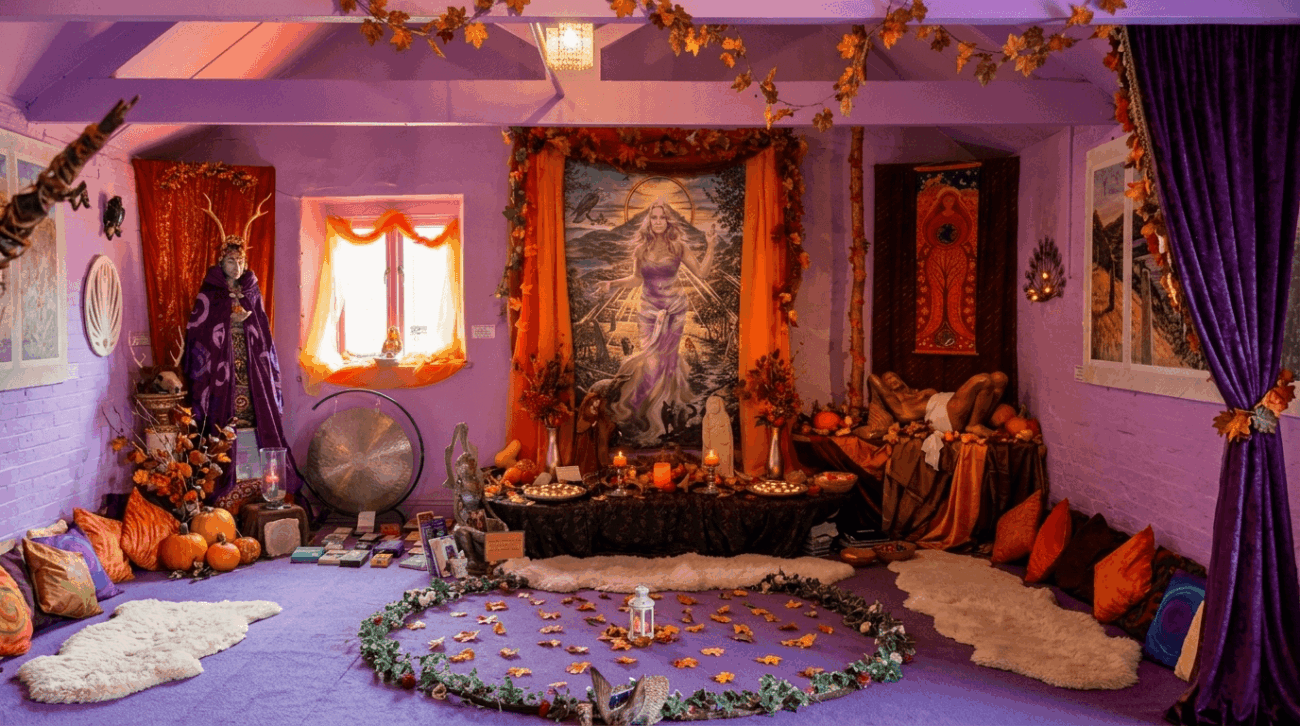
Rooted in the mythological and spiritual heritage of the British Isles, and transmitted through the Glastonbury Goddess Temple — the first legally recognised Goddess Temple in the Western world — the Avalon tradition centres on the island of Avalon as a living inner landscape of transformation and initiation.
The tradition works with the Wheel of the Year: eight seasonal festivals, each presided over by a different face of the Goddess, each inviting a specific quality of inner work and outer celebration. It is initiatory in nature — meaning that the relationship with the Goddess deepens progressively through repeated engagement with the cycle, year after year. Each turn of the Wheel reveals new layers.
The Milan International Goddess Temple is rooted in this tradition. As a Priestess of Avalon trained and dedicated at the Glastonbury Goddess Temple, I carry this lineage into my work in Italy and internationally — through ceremony, through guidance, through pilgrimage, and through the sacred space of the Temple itself.
How Goddess Spirituality Differs from Wicca and New Age
These distinctions matter, because they are frequently confused — and the confusion can lead seekers toward practices that do not fully answer what they are looking for.
Wicca is a specific modern religion, developed in the twentieth century, with its own theology, ritual structure, and initiatory system. It honours both a Goddess and a God, works with the cycles of nature, and draws on a range of esoteric sources. Goddess spirituality and Wicca share some common ground — particularly the reverence for nature and the feminine divine — but Goddess spirituality as a field is considerably broader, older in its cultural references, and not bound to Wicca’s specific theological framework.
The New Age is a cultural phenomenon rather than a coherent spiritual tradition: a wide, eclectic marketplace of practices, beliefs, and tools drawn from many different sources, often without the depth of lineage or the rigour of genuine spiritual training. Goddess spirituality at its most authentic is rooted in specific traditions, in genuine study, in community and accountability — qualities that distinguish it from the more individualised, commodity-oriented expressions of spiritual seeking that the New Age tends to produce.
This does not mean that crystals, oracle cards, or personal intuition have no place in a spiritual life. They do. The distinction lies in whether they are accompanied by something deeper — a real relationship with a living tradition, a real community of practice, a real encounter with the Goddess as a presence rather than a concept.
What Goddess Spirituality Looks Like in Practice
Goddess spirituality is not a philosophy to be understood — it is a way of life to be lived. The difference between reading about it and practising it is significant.
In practice, Goddess spirituality involves attuning to the cycles of nature and of the Moon — developing a conscious relationship with the rhythms of the year and of one’s own inner life. It involves ritual and ceremony: marking the turning of the seasons, honouring the Goddess in her many faces, creating sacred space in which something other than ordinary consciousness can speak. It involves community — gathering with others who share the path, holding space together, celebrating and grieving together across the thresholds of the year. And it involves inner work: the honest, sometimes uncomfortable process of meeting oneself in the presence of the Goddess, whose most fundamental quality is truth.
At the Milan International Goddess Temple, Goddess spirituality is lived through the seasonal celebrations of the Wheel of the Year, through women’s circles in Milan and online, through bespoke one-to-one spiritual guidance, and through sacred pilgrimages to the ancient sites of Milan and Glastonbury Avalon.
The Goddess Is Calling — What Comes Next
Goddess spirituality is one of those paths that tends to find people rather than the other way around. If you are reading this, something has already begun.
The next step is simply to keep following what calls — whether that is learning more about the tradition, attending a seasonal celebration, beginning a more structured engagement with the path, or simply making contact to ask a question.
See you at the Temple,
Anna
Priestess of the Goddess and of Avalon
I am a Priestess of the Goddess and of Avalon, and the Founder of the Milan International Goddess Temple. I trained at the Glastonbury Goddess Temple in the United Kingdom, where I serve as a celebrant Priestess and Melissa of the Temple. I hold a PhD in Old Norse, and for years I have woven historical research and spiritual practice into the work I carry at the Temple — in Milan and online. If Goddess spirituality and the Avalon tradition are calling you, my sacred offerings and experiences are open to all.

