
Blog
How to Plan Your Handfasting in Italy — A Complete Guide for Couples

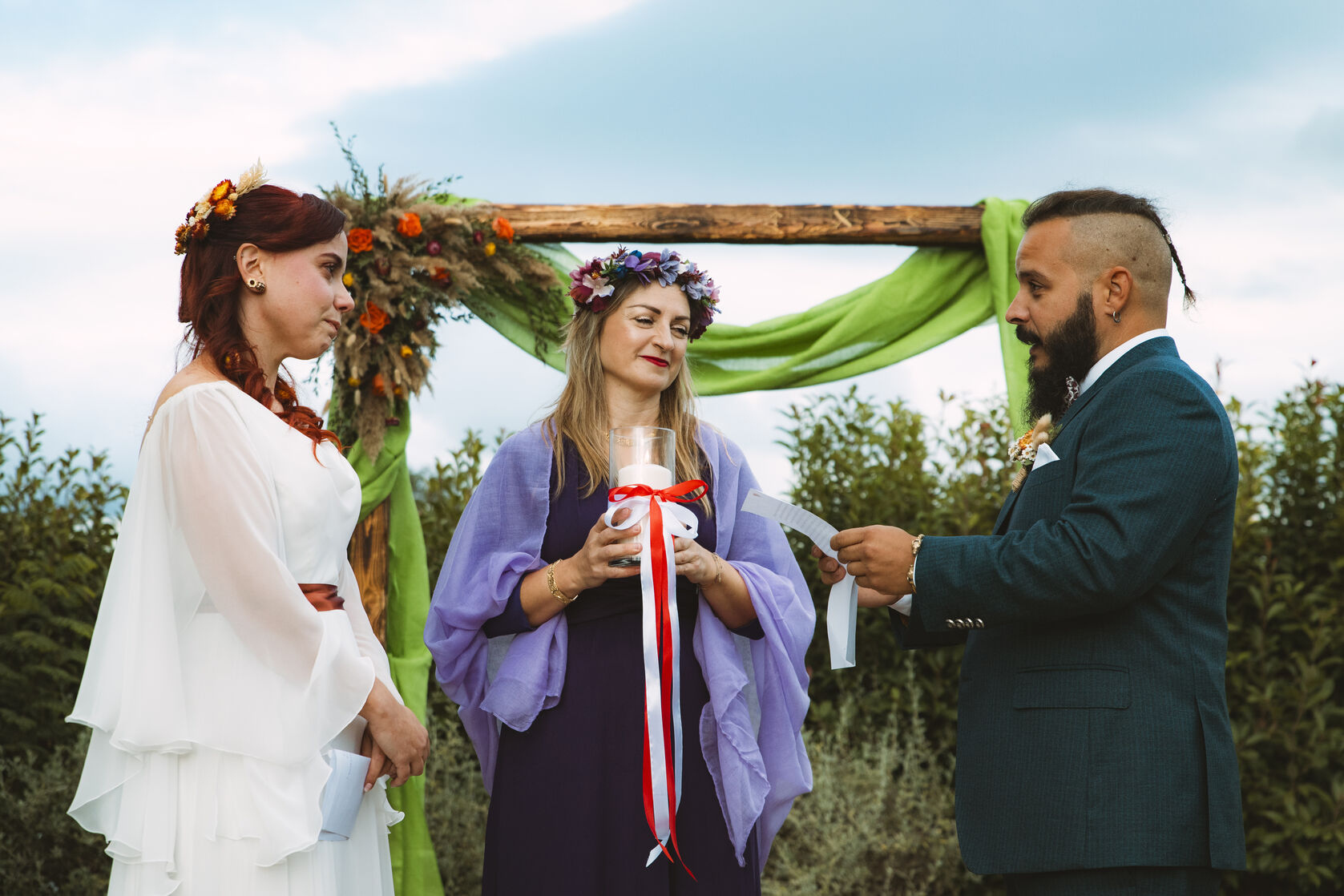
Table of Contents
Italy draws couples from across the world for a reason that goes beyond the obvious. Beyond the landscapes and the food and the light, there is something in the quality of the country itself — its layered history, its relationship with beauty as a serious matter, its capacity to hold ceremony without self-consciousness — that makes it one of the most extraordinary settings in Europe for a ceremony of genuine significance.
A Celtic handfasting in Italy is not a contradiction. The ancient and the timeless sit comfortably here. And for couples seeking a ceremony that holds more than a standard wedding script can offer — rooted in tradition, designed entirely around them, held by a celebrant who brings genuine practice rather than performance — Italy offers something that few other places can match.
This is a complete practical guide to planning a handfasting in Italy: the legal framework, the choices you will need to make, what to look for in a celebrant, and what the ceremony itself can hold.
Is Handfasting in Italy Legal?
This is the question most couples ask first, and it deserves a clear, direct answer: is handfasting in Italy legal?
A handfasting ceremony conducted in Italy by a Priestess of Avalon is a spiritual and symbolic ceremony. It does not, on its own, carry legal validity as a registered marriage under Italian law. Italy recognises civil marriage (celebrated at the local municipality) and religious marriage within the faiths officially recognised by the Italian state. A Celtic handfasting falls outside both categories.
This means that couples who want both a spiritual ceremony and legal recognition of their union will need to arrange these separately. In practice, this is how most couples approach a handfasting in Italy — and many find that the separation is not a limitation but a genuine relief.
The civil registration — whether in Italy at the local comune, or in your home country before or after the trip — becomes a practical formality: a signature, a witness, a stamp. The handfasting becomes the ceremony that actually matters: the one you have designed, the one held by a celebrant you have chosen, the one in which the words spoken are genuinely yours. No prescribed script, no institutional requirements, no compromise on what the ceremony holds.
For couples already legally married who want a spiritual ceremony to mark or renew their union, a handfasting in Italy is an entirely complete and self-contained experience — nothing additional is needed.
If you have specific questions about civil marriage requirements in Italy, the relevant authority is the Italian municipality (comune) where you plan to register, or your country’s Consulate or Embassy in Italy.
Why Italy for a Handfasting?
The practical answer is straightforward: Italy offers an extraordinary range of settings, a culture that takes beauty and ceremony seriously, a cuisine that makes the celebration after the ceremony as memorable as the ceremony itself, and — in the case of northern Italy and Milan specifically — a sacred history that gives a Celtic handfasting a resonance that few people expect when they first consider the country.
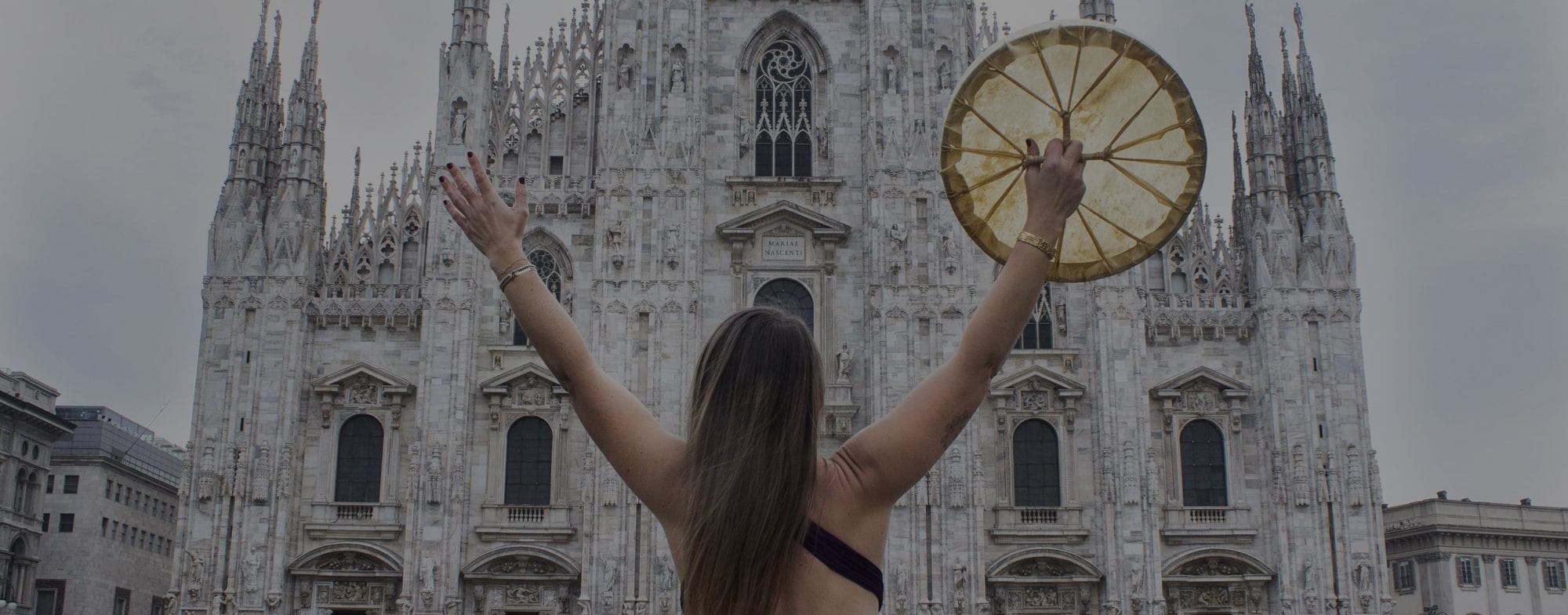
Milan was founded as Medhelan by the Celtic Insubres in 590 BCE — one of the great Celtic cities of ancient Europe, with a sacred feminine tradition that runs uninterrupted beneath the modern metropolis. A handfasting held in or near this city is not a ceremony transplanted from another culture into an indifferent setting. It is a ceremony held on ground that has understood the sacred feminine, elemental ritual, and the marking of human thresholds for more than two and a half thousand years.
Beyond Milan, Italy offers the Italian Lakes — Lago di Como, Lago Maggiore, Lago d’Orta — among the most breathtakingly beautiful ceremonial landscapes in Europe. The Italian countryside: Tuscany, Umbria, the rolling hills of Piedmont. Ancient stone villages, private gardens, hilltop settings with views that hold the ceremony within something genuinely larger than the human scale. Handfasting in Italy is a truly magical experience.
Italy is also a destination wedding hub with an established infrastructure: excellent accommodation across every price point, world-class food and wine, easy international connections from North America, the UK, Australia, and across Europe. The logistics, handled well, are genuinely manageable for a handfasting in Italy.
Choosing Your Celebrant — What to Look For
The celebrant is the most important decision in planning a handfasting. The ceremony will be exactly as good as the person holding it — and no setting, however beautiful, compensates for a celebrant who is reading from a script they did not write, in a tradition they do not actually practice.
For a Celtic handfasting rooted in the Avalon tradition, the relevant questions to ask any celebrant are straightforward:
What tradition are you trained in, and by whom? A genuine Celtic handfasting is not an improvised spiritual ceremony — it draws on a specific lineage of practice. Ask where the celebrant trained, with whom, and how long they have been practicing within that tradition.
Have you officiated handfastings before? Experience matters. The celebrant’s ease and presence during the ceremony directly affects the quality of the experience for everyone present.
How do you work with couples to design the ceremony? A genuine handfasting is never a template. It is built in close conversation with the couple over a period of weeks, incorporating their specific vows, their chosen elements and correspondences, their vision for the shape and tone of the ceremony. Ask how this process works.
Do you speak English fluently? For international couples — particularly those coming from the UK, Ireland, North America, or Australia — working with an English-speaking celebrant in Italy is not a minor convenience for an handfasting in Italy. The vows, the pre-ceremony conversations, the ceremony itself: all of this needs to happen in the language in which you actually think and feel. A ceremony in a language you do not fully inhabit is a ceremony at one remove from you.
As a Priestess of Avalon ordained at the Glastonbury Goddess Temple, with years of practice in sacred ceremony and a full training in the Avalon tradition, I work entirely in English with international couples for a handfasting in Italy or abroad. Every ceremony is designed from scratch, in close conversation, over several weeks before the date.
Planning the Ceremony — The Choices You Will Need to Make
Once you have chosen your celebrant, the design process begins. Here are the main elements you will need to think through:
The vows. These are the heart of the ceremony — the words you will actually say to each other, in front of witnesses, within a sacred container. They do not need to be poetic or elaborate. They need to be true. Most couples find that the process of writing their vows — guided by the celebrant — is one of the most meaningful parts of the entire experience.
The cord. The handfasting cord is typically chosen by the couple, sometimes in consultation with the celebrant. Colours, materials, and number of strands all carry meaning. Some couples commission a cord made to order; others choose one together as part of the ceremony preparation.
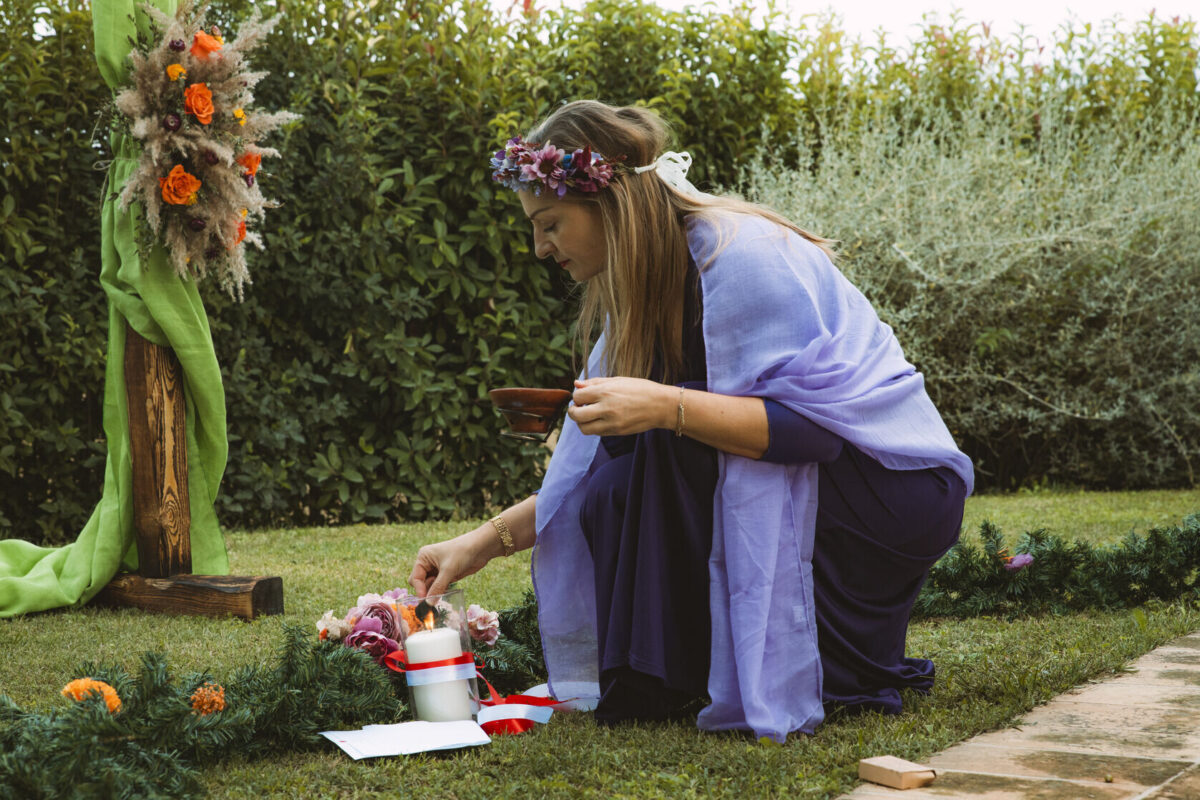
The elements. In the Avalon tradition, a handfasting ceremony invokes the five sacred elements — Earth, Water, Fire, Air, and Spirit — each as a witness to the union. How these are represented in the ceremony (through candles, water, incense, stones, flowers) is part of the design conversation.
The witnesses. Handfasting has always been a witnessed ceremony — the presence of others who hear the vows and see the binding is part of what gives the commitment its weight. There are no minimum or maximum numbers; couples have held intimate handfastings with two witnesses and celebratory gatherings of hundreds.
The setting. Indoor or outdoor, urban or rural, intimate or expansive — the setting shapes everything. We will discuss location options as part of the planning process, including the bespoke sacred sites and spaces available in and around Milan.

After the Ceremony — Making the Most of Italy
A handfasting in Italy does not need to be a single event in isolation. Many couples build a longer experience around it: a sacred tour of the city’s ancient Celtic history before the ceremony, a ceremonial dinner in one of Milan’s oldest neighbourhoods afterwards, a few days in the Italian Lakes or countryside to absorb what has happened before returning home.
As a Priestess of Avalon with deep knowledge of Milan’s sacred geography and its best kept culinary and cultural spaces, I can help design not only the ceremony but the full experience around it — for those who want something genuinely immersive and bespoke rather than a ceremony slotted into a standard itinerary.
For couples specifically considering Milan and its idyllic countryside as their location, this article offers a complete picture of what a handfasting in this extraordinary city and region can look like — the settings, the sacred history, and the full experience available.
Frequently Asked Questions:
Can we have a handfasting in a private villa or outdoor location in Italy?
Yes. Handfasting ceremonies can be held in virtually any setting — private villas, gardens, lakeside locations, urban courtyards, beaches, or sacred sites. The ceremony is designed around you, including the choice of setting.
Do you travel outside Milan for ceremonies?
Yes, I travel in Italy and internationally. Travel arrangements and any additional costs are discussed during the planning process. Contact me directly to discuss your preferred location.
How far in advance should we book?
I recommend getting in touch at least three to six months before your intended date, particularly for peak travel seasons in Italy (May through September). The ceremony design process takes several weeks and benefits from time.
Do you officiate in English?
Yes, entirely. All ceremonies for international couples are conducted in English. Pre-ceremony consultations, vow writing, and all communications are also in English.
Where can I find more information about having a wedding in Italy, and how do I get in touch?
You will find everything about the ceremonies I create — symbolic, Celtic and handfasting — on my Wedding Celebrant in Italy page. If you would like to talk about your wedding, you can reach me directly at info@tempiointernazionaledelladea.com.
See you at the Temple,
Anna
Priestess of the Goddess and of Avalon
I am a Priestess of the Goddess and of Avalon, and the Founder of the Milan International Goddess Temple. I trained at the Glastonbury Goddess Temple in the United Kingdom, where I serve as a celebrant Priestess and Melissa of the Temple. I hold a PhD in Old Norse, and I officiate handfasting in Italy and internationally — in English — within the living lineage of the Avalon tradition. If you are planning a handfasting in Italy or abroad, get in touch to begin the conversation.

